What the order asks
The card combines three style minimums — Cool, Gothic, Risqué — with a material rule, use only silk, and a tight budget. “Only” is checked per fabric entry: every fabric on the dress must be silk, so open each candidate's card and confirm the type tag before buying. The documented route is a twilight-hour bodice and twilight-hour skirt with pleated drop sleeves.
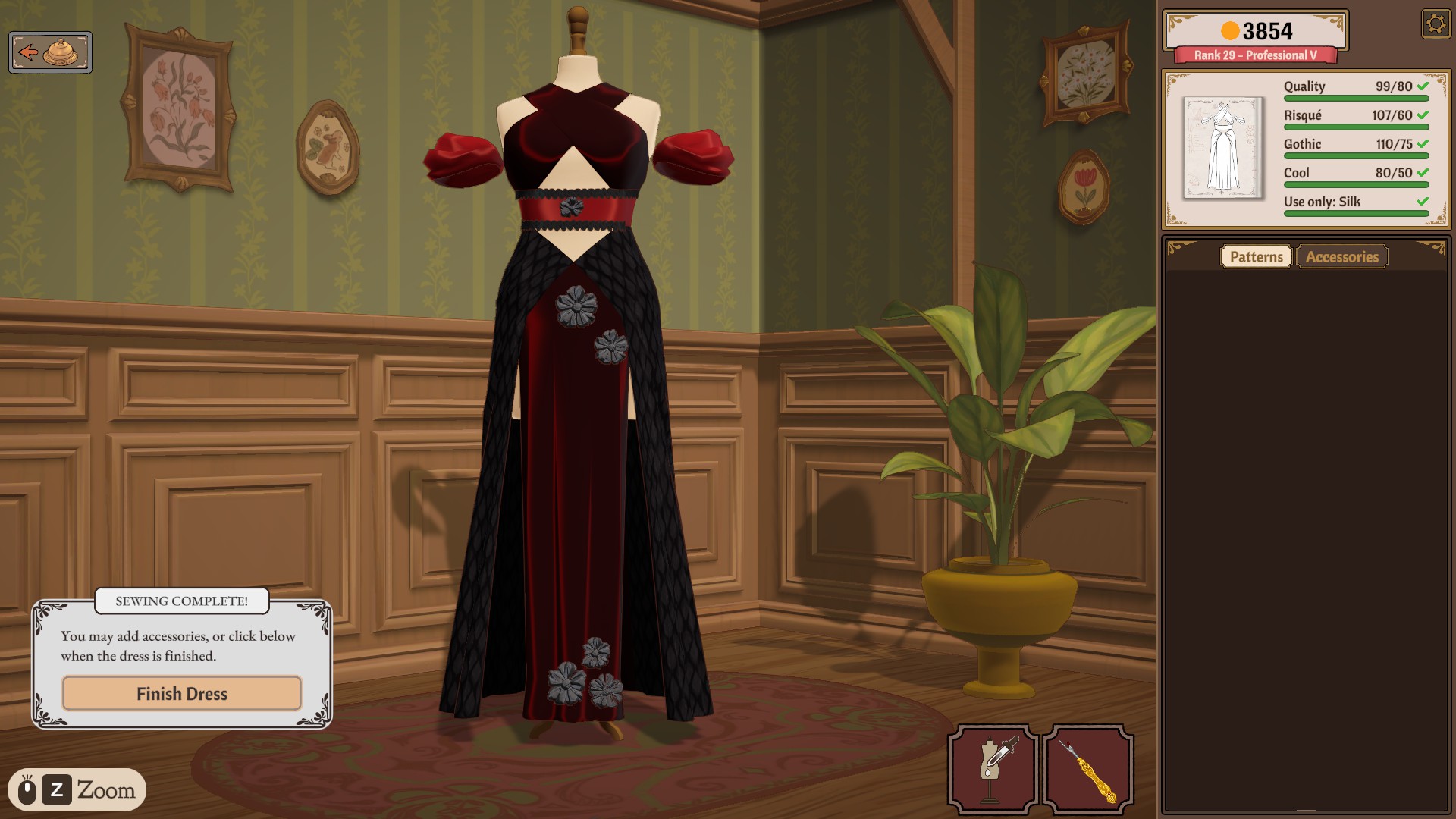
A low-metre silk plan
The walkthrough's reason for the twilight-hour pieces is exactly their economy: a simple, low-metre pattern keeps the total silk you must buy small, which is where this budget is won or lost. Reaching for a grand, high-volume silhouette in silk is how this order blows its purse — expensive fabric does not automatically score the style rows, so extra metres buy cost, not points.
Within the silk shelf, compare entries by their style tags against the three rows you owe. Filter the store by type: Silk and read tags rather than prices: the right Cool- or Gothic-tagged silk does more for the card than a second bolt of a glamour-leaning one.
When a style row lags
- Check which of Cool, Gothic or Risqué is short against its marker.
- Swap the smallest silk piece to a silk entry tagged for the missing style — collar and sleeves move rows without rebuying the body.
- Never patch a gap with cotton or velvet: one non-silk entry breaks the “Use only: Silk” rule outright.
- Re-check the running total after each change; a tight budget fails quietly while you chase style points.
Before delivery
- Every fabric entry confirmed silk by its type tag.
- Cool, Gothic and Risqué all at or past their markers.
- The spend still inside the budget row your card shows.
- Quality at its target; if it lags, review the measuring-to-sewing chain.
- Then finish and choose Complete Commission.